
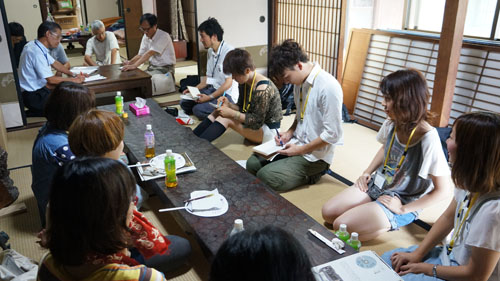
The team in charge of the Hojo area began their fieldwork.
Their unit discussed architecture and design with Pr. Ando, who has been working on construction projects in Hojo. They also interviewed local representatives about the history of Hojo and the tornado’s impact.
After examining warehouses that were damaged by the earthquake and tornado the group was able to analyze the actions taken in the aftermath and hear about how they plan on continuing their efforts.
Thanks to this investigation the researchers were made aware of the true hopes and fears of disaster victims. Based on these experiences the Hojo team will review options regarding proper disaster response procedures in the affected areas. (Kataoka)
 Continue reading
Category Archives: Lessons
Hinode Junior High School Meeting
October 17, 2012
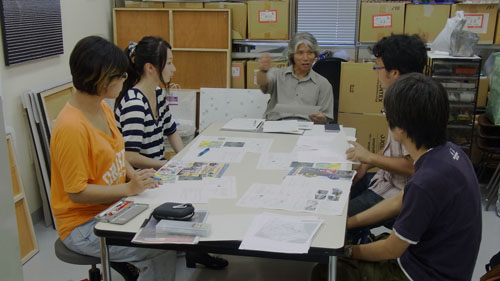
The members in charge of the Itako area convened at the university to hold a debriefing session on the situation in the Hinode district and exchanged opinions about the investigation. On October 24th, the team traveled there to have a meeting with the faculty of the junior high school. It was an occasion to discuss the concrete objectives of collaboration between the school and the university as well as to update everyone on the real condition of the area. This meeting proved to be the origin of a deep reflection on the attainable goals of the project.
We also took a look at the surrounding environs of Hinode. Here and there, construction was taking place to repair damages from the liquefaction phenomenon — however, it seemed to us that there is still a great amount of time and progress before the area would return to the way it appeared prior to the disaster. (Kamiura)
 Continue reading
Research in Iwaki
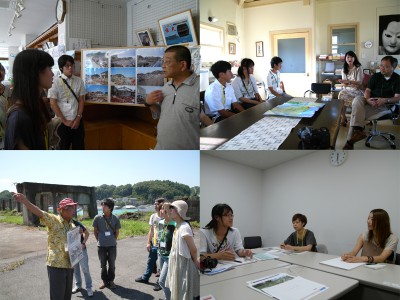
The area research team organized an onsite observation tour from August 21st through 23rd, during which they inspected the damages and assessed the progress of the recovery in Iwaki. We heard accounts of disaster experiences and got a first-hand look at the current condition of the city. We met with local artists and other creative minds to hear to their post-earthquake activities.
On the last day, each member chose a theme, formulated plans of coverage and spread out in the city. Following our investigations, members reported back to the group to share the information retrieved. We were all able to interact and empathize with residents on an intimate level. Previously our only source was the media, but this tour allowed us to fully realize the situation in Iwaki through hands-on fieldwork.
 Continue reading
Announcement of the date for the 2nd public viewing of Kazunari Watanabe’s cycle race.
Since the timing of the race in which Kazunari Watanabe would participate was not determined, we were awaiting confirmation before scheduling a date for the public screening. It has now been decided that the 2nd public viewing would be held on August 8th.
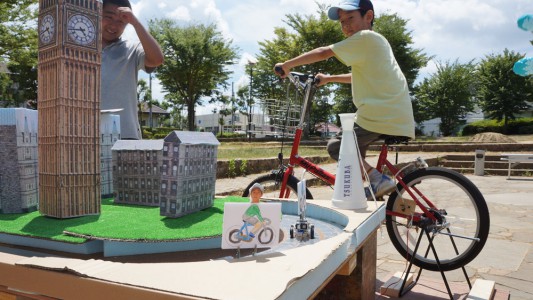
Today was the first viewing. The people from Futaba as well as school children from the children’s house were present for this lively gathering. Also, the “Power generation! Miniature cycle race” that was held at the same time proved to be very popular.
We look forward to active participation at the 2nd viewing for those who were here today as well as those who could not attend.
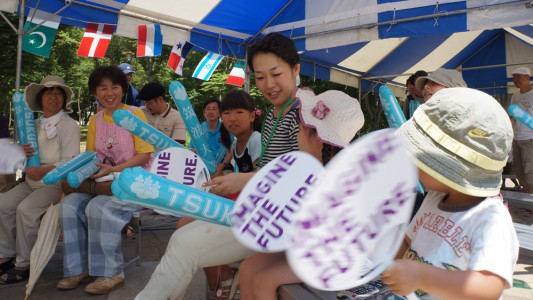
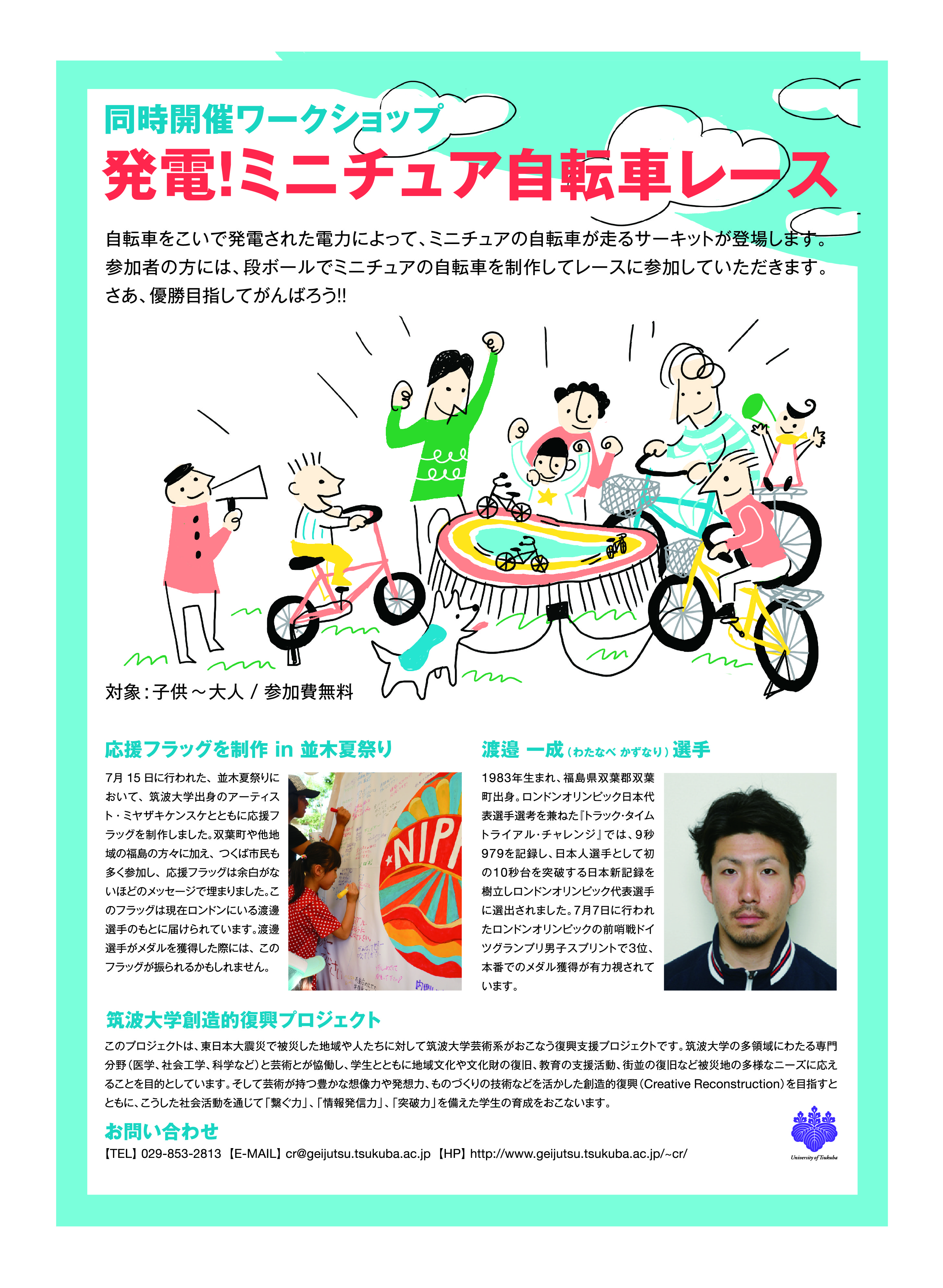
Public viewing to cheer for Kazunari Watanabe!
There are presently about 50 households (mainly from Futaba in the Fukushima prefecture) that have been evacuated to Namiki, Tsukuba city. In this context, we are delighted to hear that Kazunari Watanabe, native of Futaba, will attend the London Olympics to compete in the cycle race. Since the people of Futuba have been domestically displaced, we would like to encourage the whole city of Tsukuba to cheer for Kazunari Watanabe! A public screening of the taped broadcast of Kazunari Watanabe’s Olympic cycling event will be shown. The viewing will also be an occasion for a workshop called “Power generation! Miniature cycle race”, so let’s cheer for Kazunari Watanabe while having fun! (Kataoka)

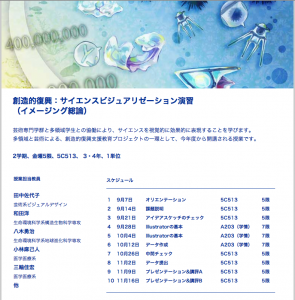
Scientific Visualization: Website Launch !
In preparation for the lecture series that will commence at the start of the second semester, we are proud to launch a special website dedicated to the Scientific Visualization forum. Professors from a variety of fields will direct these upcoming workshops.
We encourage all participants of the class to explore the website. Here you can find links to each professors’ homepage as well as important course information (schedule changes, etc).
http://www.geijutsu.tsukuba.ac.jp/~satanaka/sv/
The Namiki project
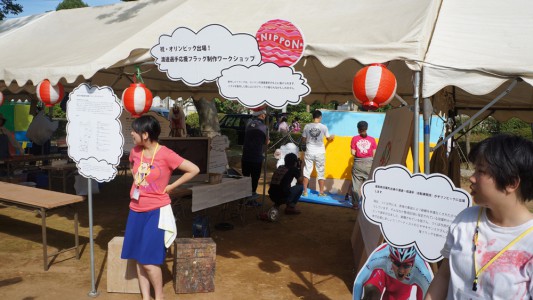
There are presently about 50 households (mainly from Futaba in the Fukushima prefecture) that have been evacuated to Namiki, Tsukuba city. In this context, we are delighted to hear that Kazunari Watanabe, native of Futaba, will attend the London Olympics to compete in the cycle race. We have initiated the “Kazunari Watanabe Cheering Program” for Futaba evacuees and the citizens of Namiki, Tsukuba — it is our hope that this program will foster communication and understanding between the two communities.
A cheering flag was created at the Summer Festival of Namiki held on the 15th (Sunday). The central image was designed by the artist Kensuke Miyazaki; the people of Tsukuba adorned the banner with messages of support directed at citizens of Futaba and other districts around Fukushima. Since the disaster, Kensuke Miyazaki has been diligently working on various projects promoting recovery. For more details about his activities, please visit his website:
>>http://www.miyazakingdom.com/
 Continue reading
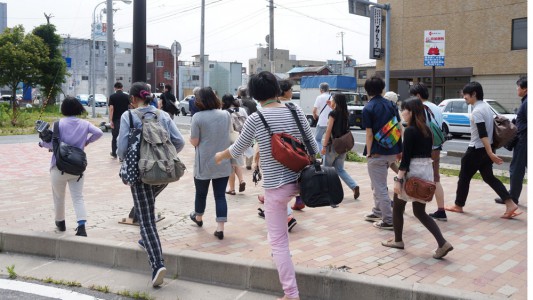
Group #2: Visit to Sanriku, 1st day
Today the second group arrived in Sanriku. The structure of their visit was very similar the first group’s.
Continue reading
Visit to Sanriku, 2nd day
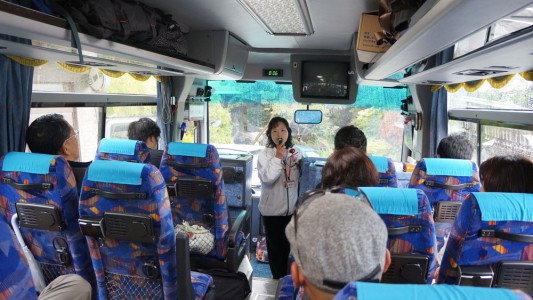
During the hour-long drive from Ofunato to our lodgings in Rikuzentakada, we spoke with Ruriko Mori, a survivor of the tsunami. She told us about the extent of the damages at the time.
 Continue reading
Group #1: Visit to Sanriku, 1st day
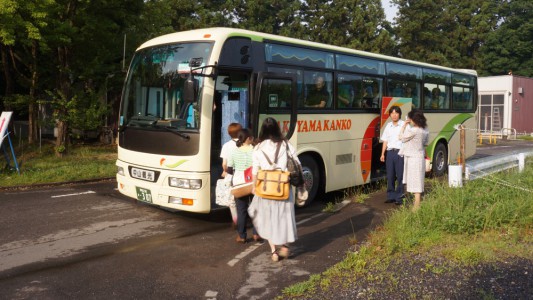
As an intensive course for the CR project, we organized a visit to Sanriku for 2 days and one night. Due to the large number of participants (60 people), we have divided into 2 groups. Today we are taking the first group to carry out an inspection — along with the teachers there is a total of 40 people. We traveled to Sanriku aboard a large charter bus.
 Continue reading