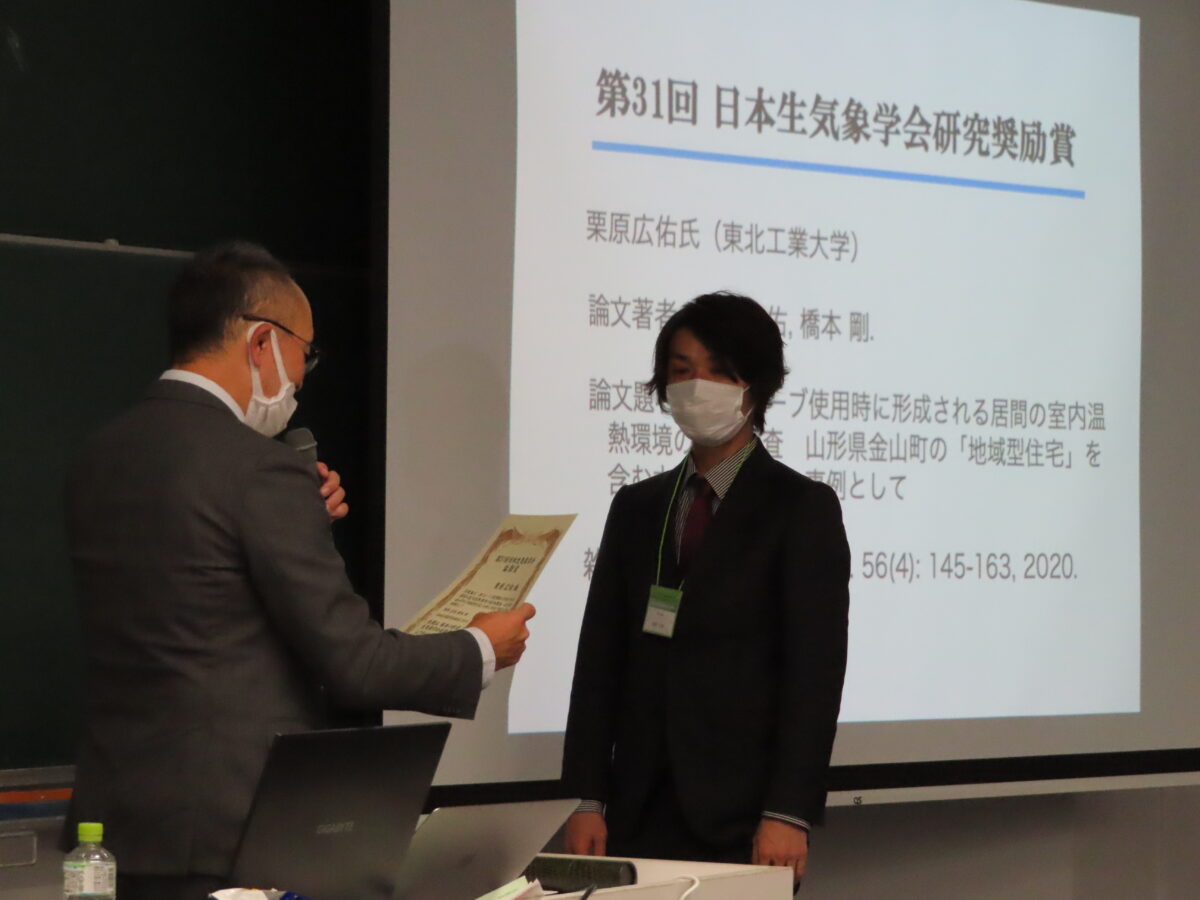
[Award report] Professor Hirosuke Kurihara, a graduate of our laboratory, received the 31st Research Encouragement Award of the Japanese Society of Biometeorology!

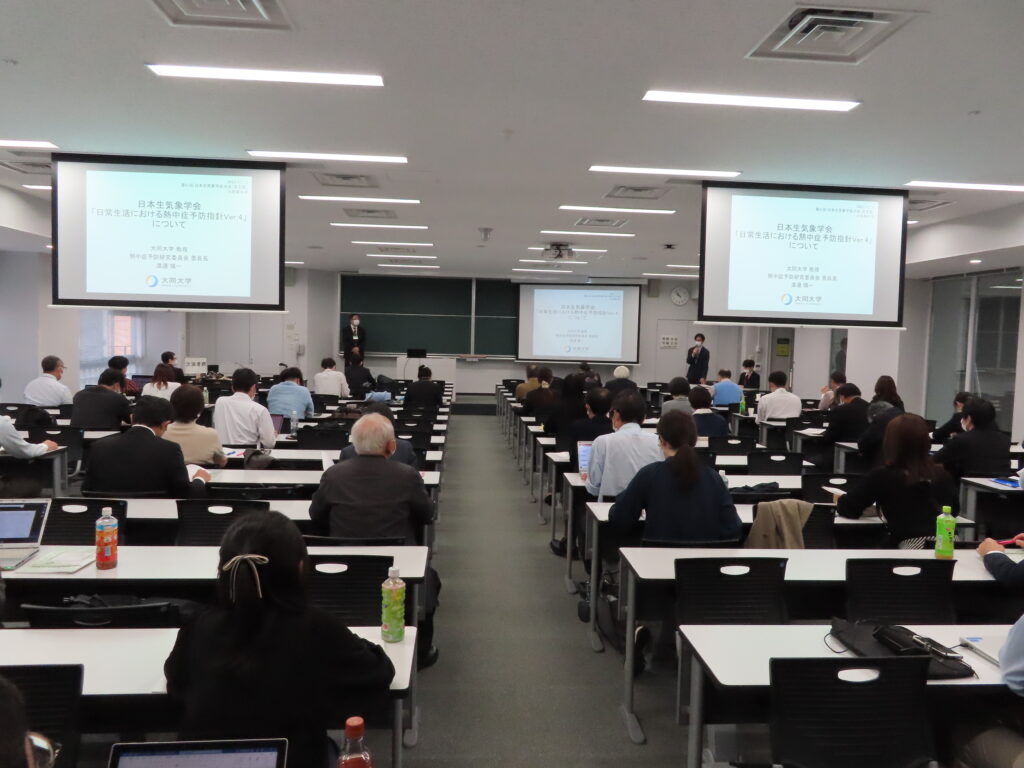
Professor Hirosuke Kurihara, a lecturer at Tohoku Institute of Technology and a graduate of Hashimoto's laboratory, received the 31st Research Encouragement Award of the Japanese Society of Biometeorology, and the award ceremony was held at the 61st Annual Meeting of the Japan Society of Biometeorology (Nagoya). There was also a lecture commemorating the award.

The award-winning paper is based on research that Professor Kurihara conducted while enrolled in our laboratory as a doctoral graduate student.

Award-winning thesis title: “Actual measurement investigation of the indoor thermal environment created in the living room when using a wood-burning stove”
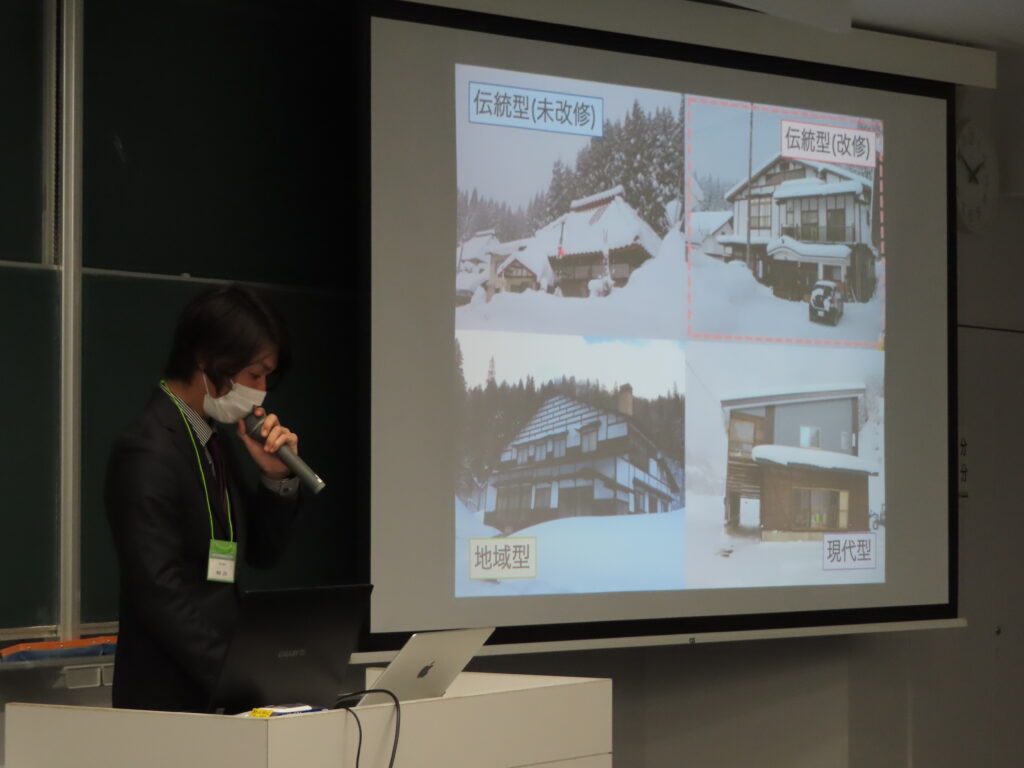
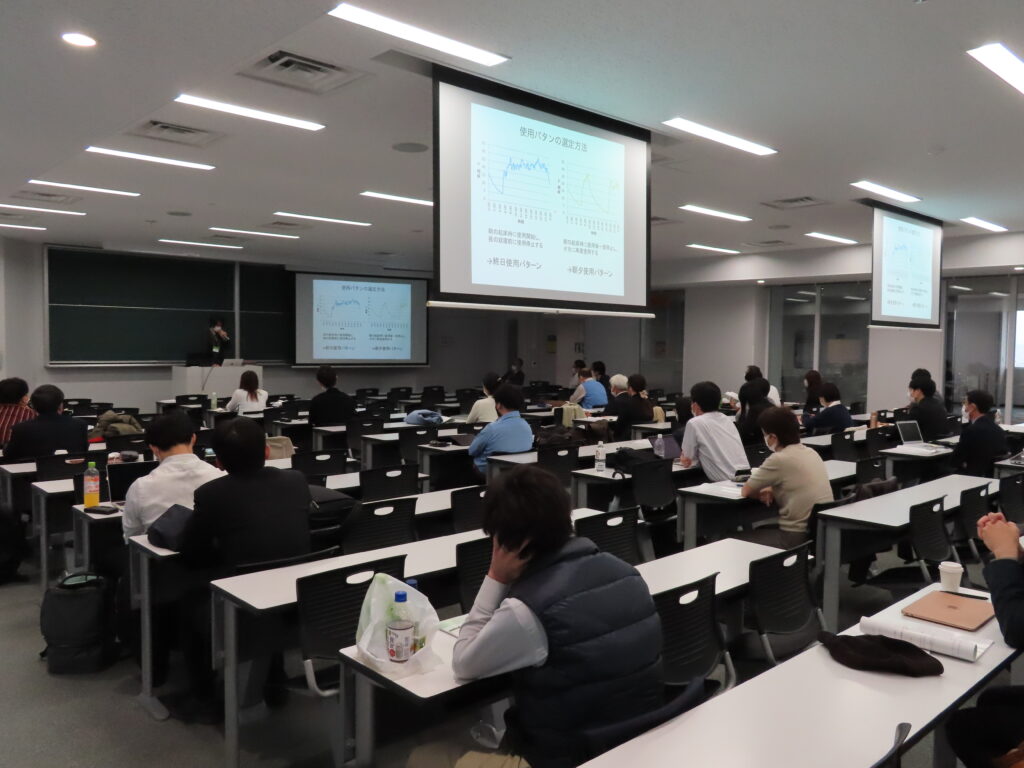
  

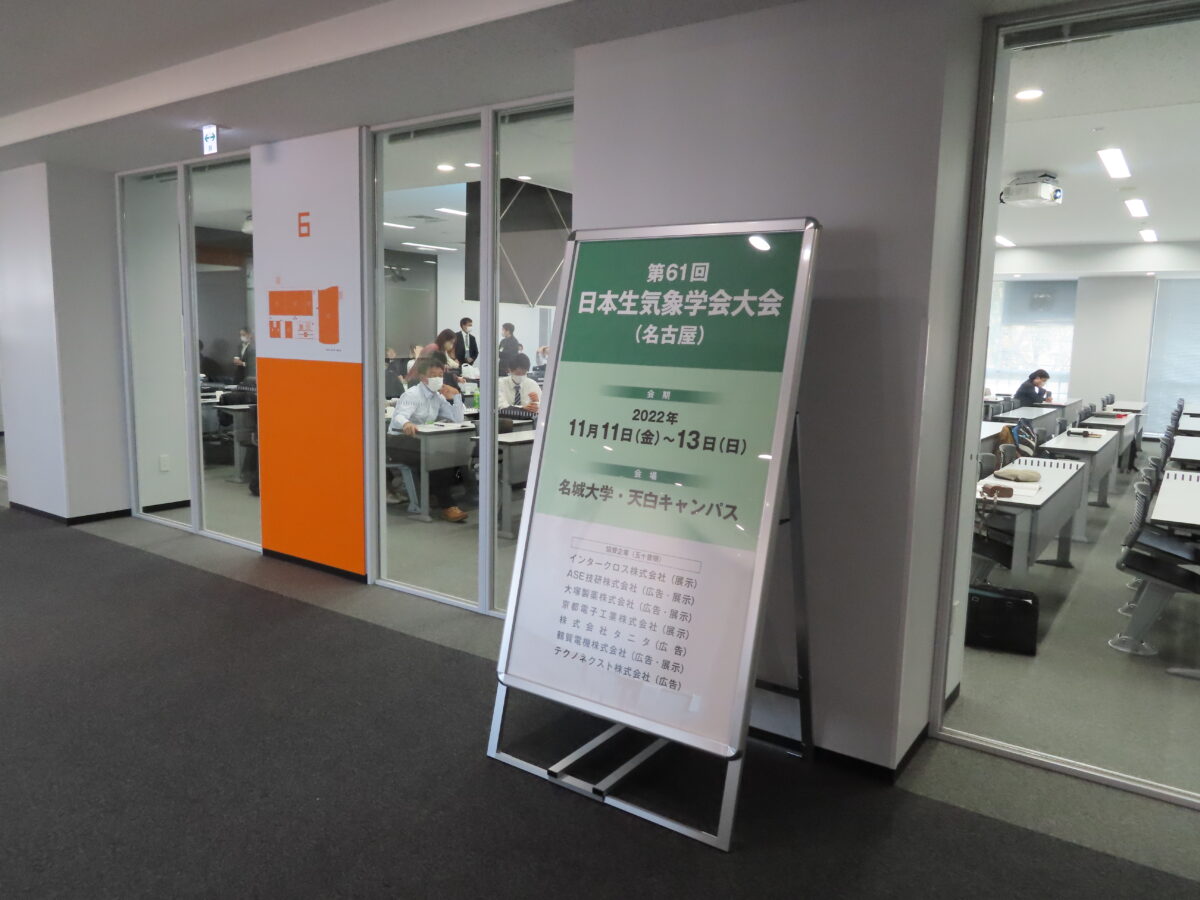
61st Japanese Society of Biometeorology Conference (Nagoya)

I participated in the 61st Japanese Society of Biometeorology Conference (Nagoya) held at Meijo University.

The chairman is Professor Hitoshi Ishii of Meijo University.

I was able to work behind the scenes as part of the executive committee for this tournament, and I learned a lot.

We would like to express our gratitude to the chairman, Professor Ishii, and the executive committee members, Professor Naoki Nishimura of Nippon Fukushi University, Professor Futoshi Matsumoto of Nihon Fukushi University, and Professor Shinichi Watanabe of Daido University.thank you very much.


The 59th and 60th competitions were held online, but this time it will be held face-to-face for the first time in three years.

Of course, online has the advantage of not requiring transportation costs or travel time, but I personally prefer face-to-face meetings.


■This announcement

Tsuyoshi Hashimoto, Shinichi Watanabe, Hitoshi Ishii: Thermal environment formed in the underfloor spaces of Takakura buildings of different sizes in summer

Hirosuke Kurihara, Tsuyoshi Hashimoto: Survey on the heat mitigation effect of Yashiki-mori in scattered settlements


Iide Kazarai WS

I participated in a Kazarai workshop in Iide Town, Yamagata Prefecture.

This is the second installment following the Yashikibayashi Environmental WS held in July.

The person in charge of this WS is Professor Hama from Yamagata University.

Experience making kazarai with Mr. Takahashi from Iide Town, who makes kazarai every year, as your instructor.

There was a time when we couldn't hold face-to-face events due to the coronavirus, but it's still fun to create something together.


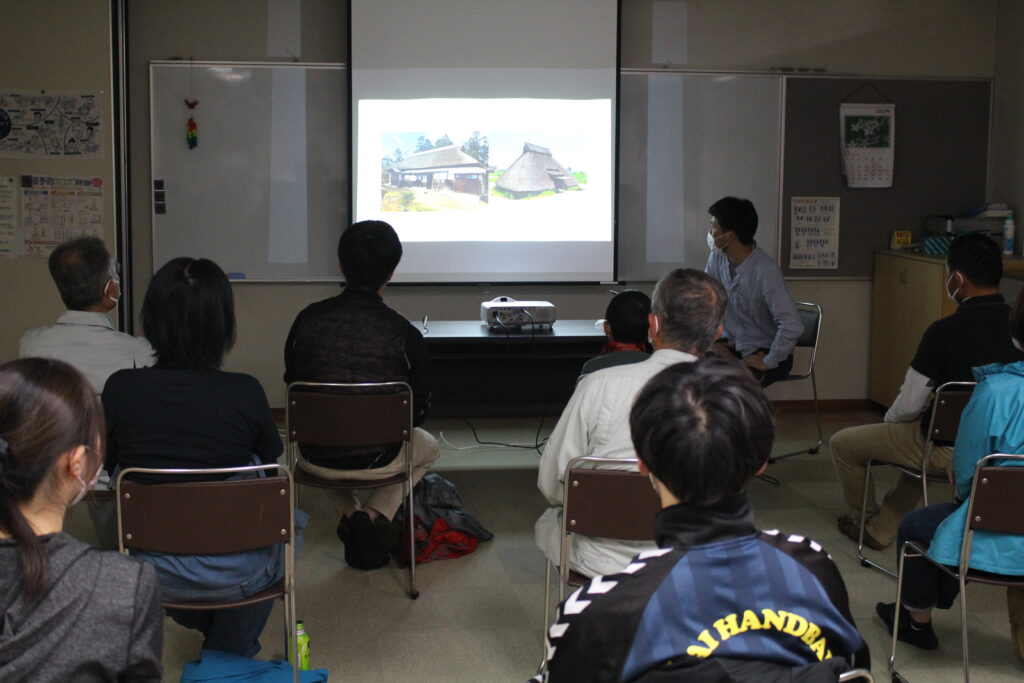
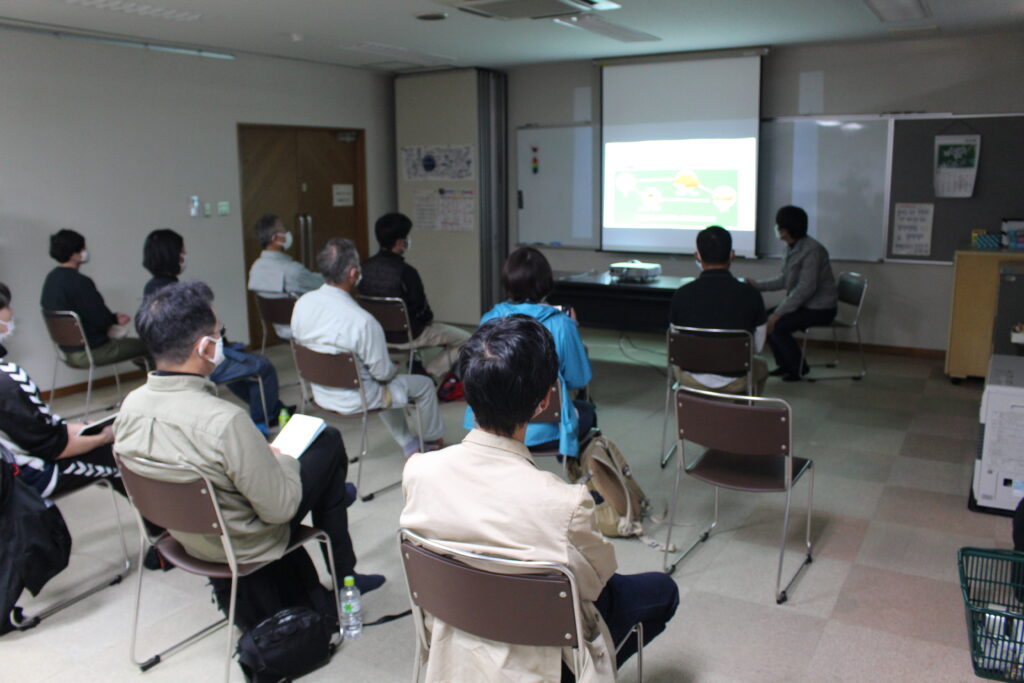
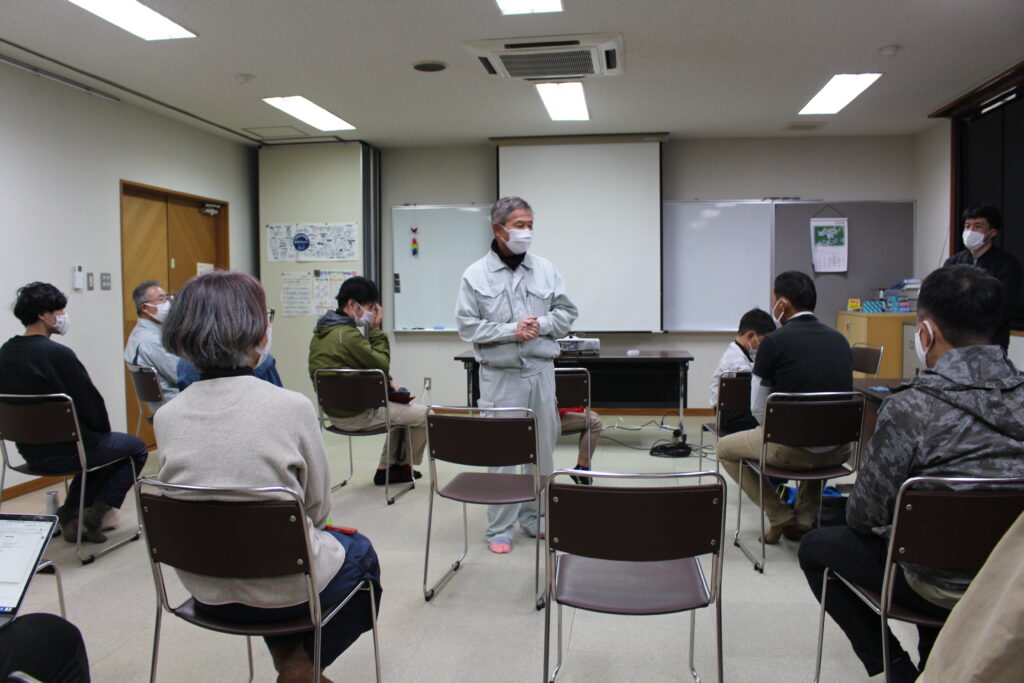
First, there was a lecture by Professor Hama from Yamagata University at the community center.
Next was a lecture by special lecturer Mr. Kubota, a thatched roof craftsman.
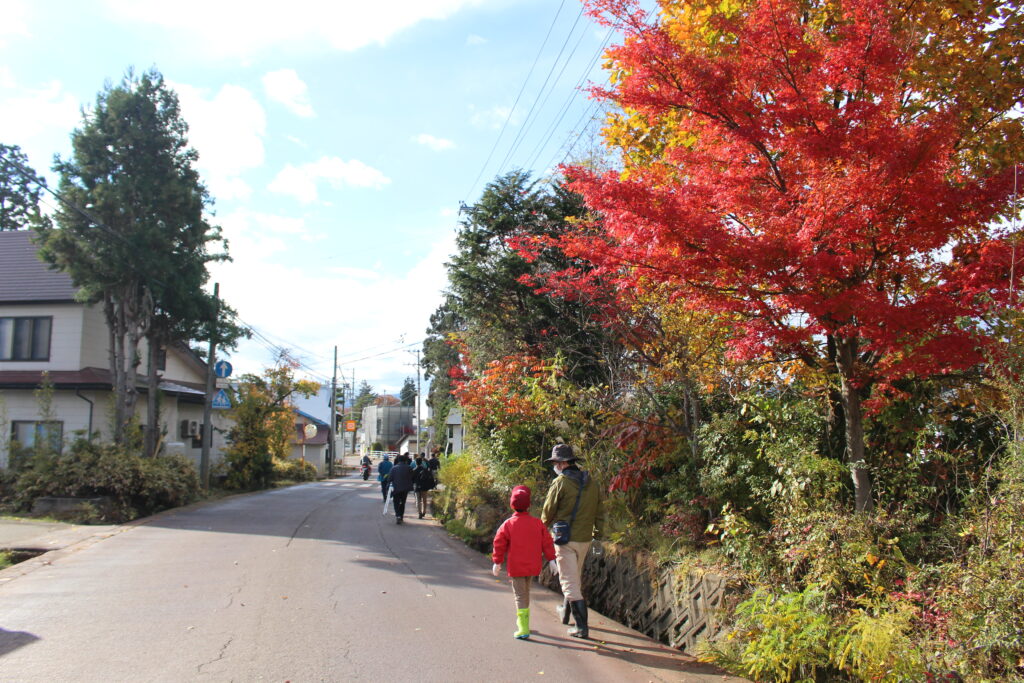
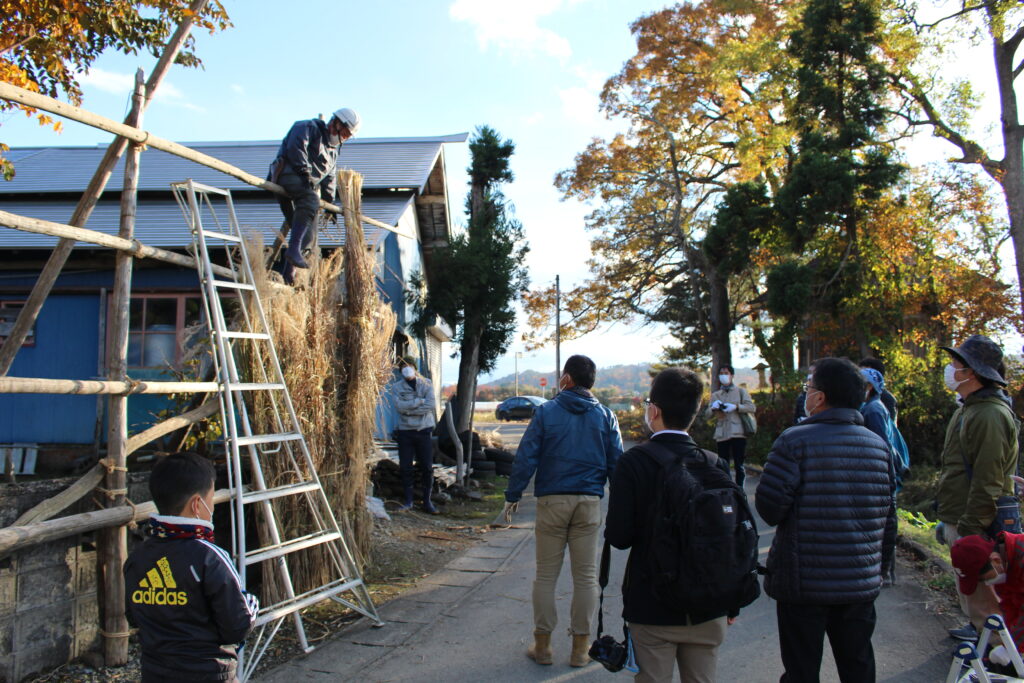
Walk to the location.
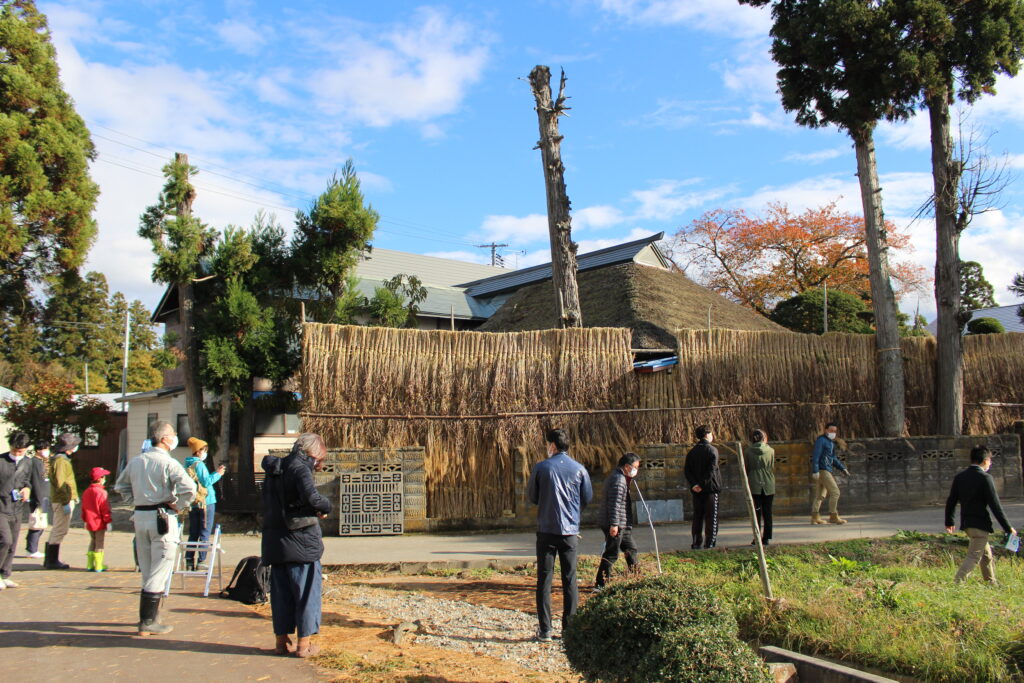
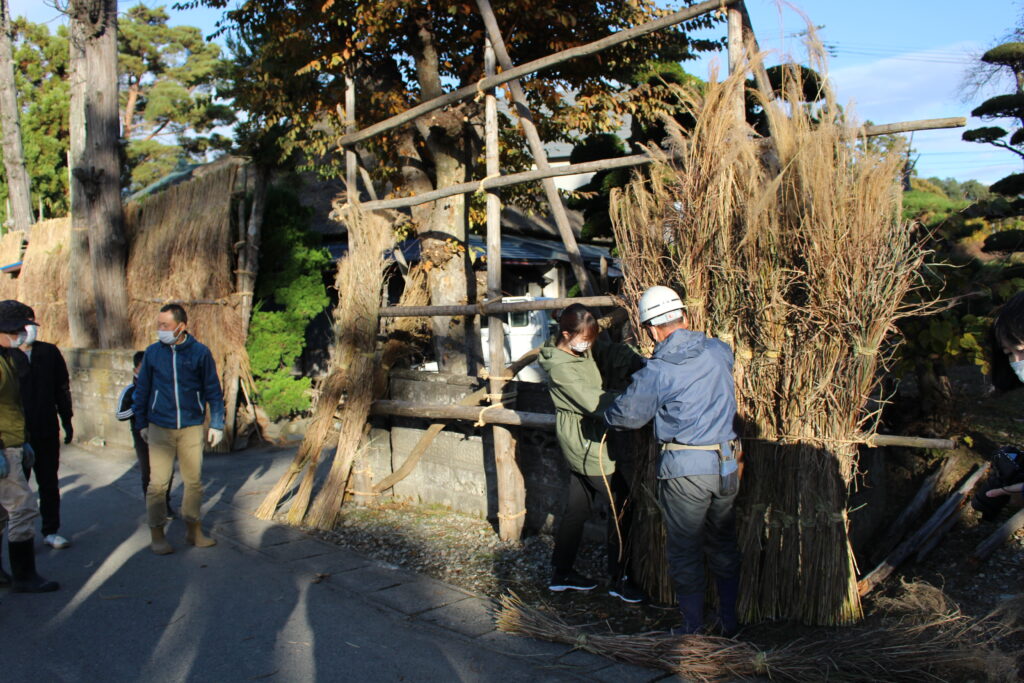
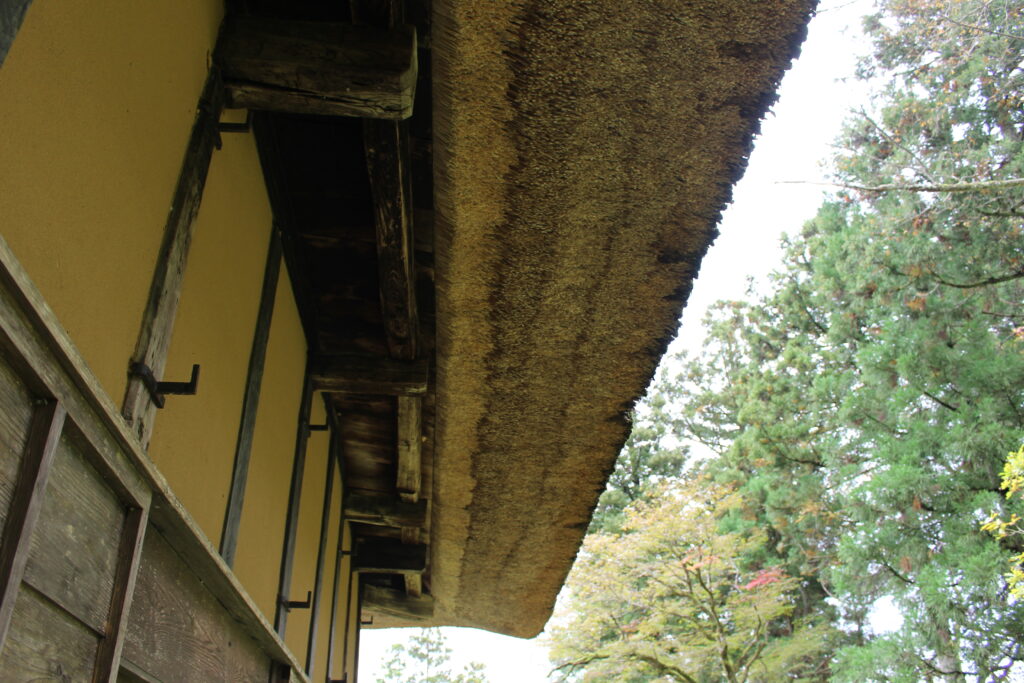
This is Kazarai.
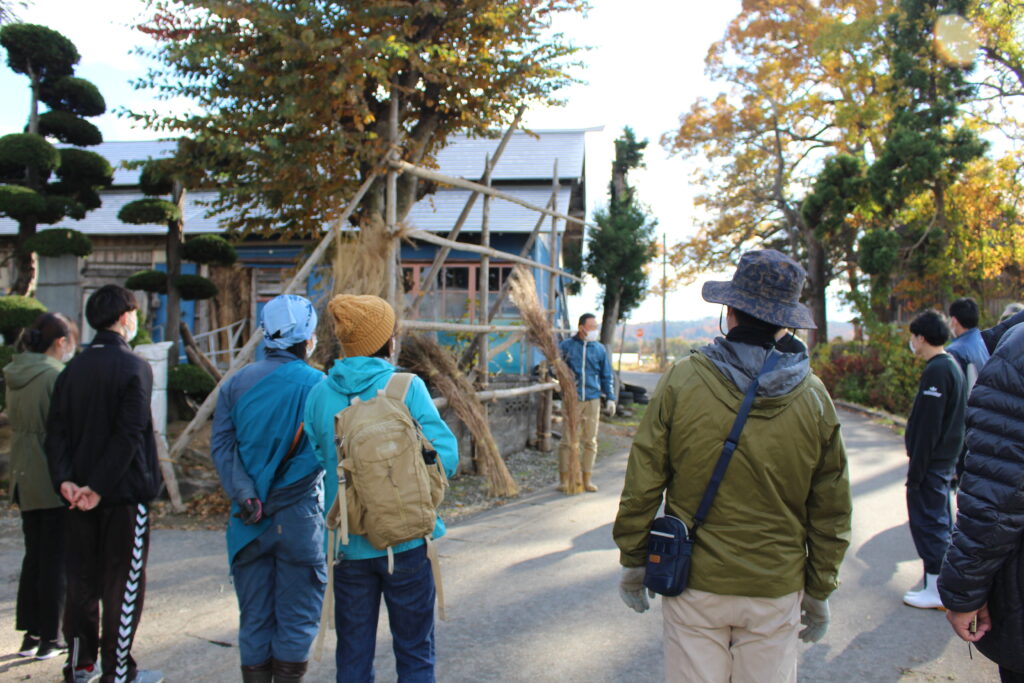
Mr. Takahashi explains the flow of the trial session.
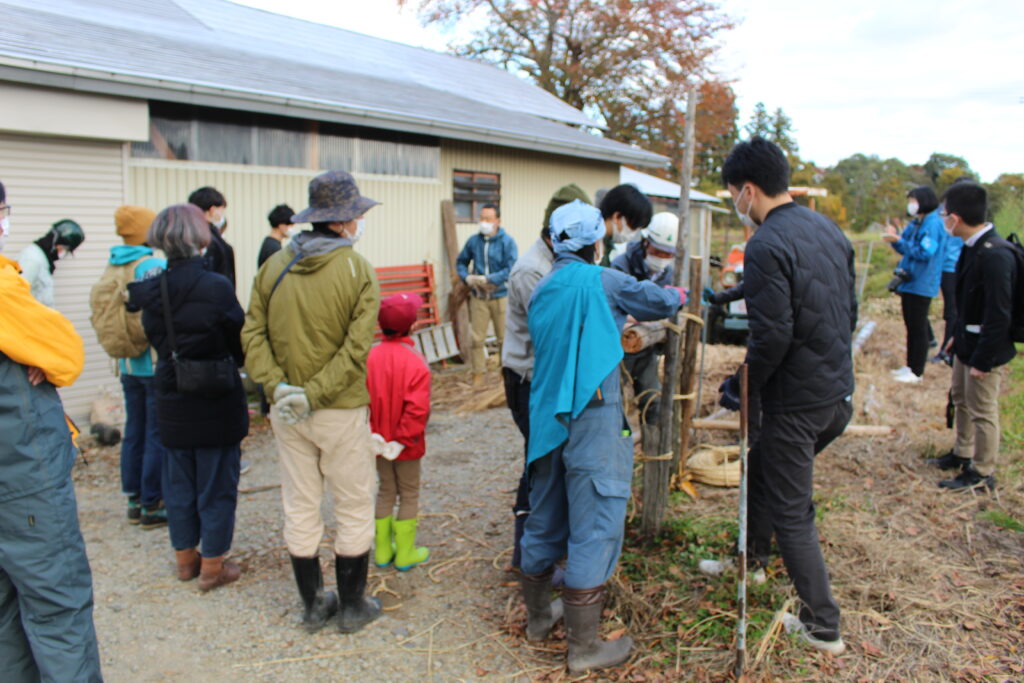
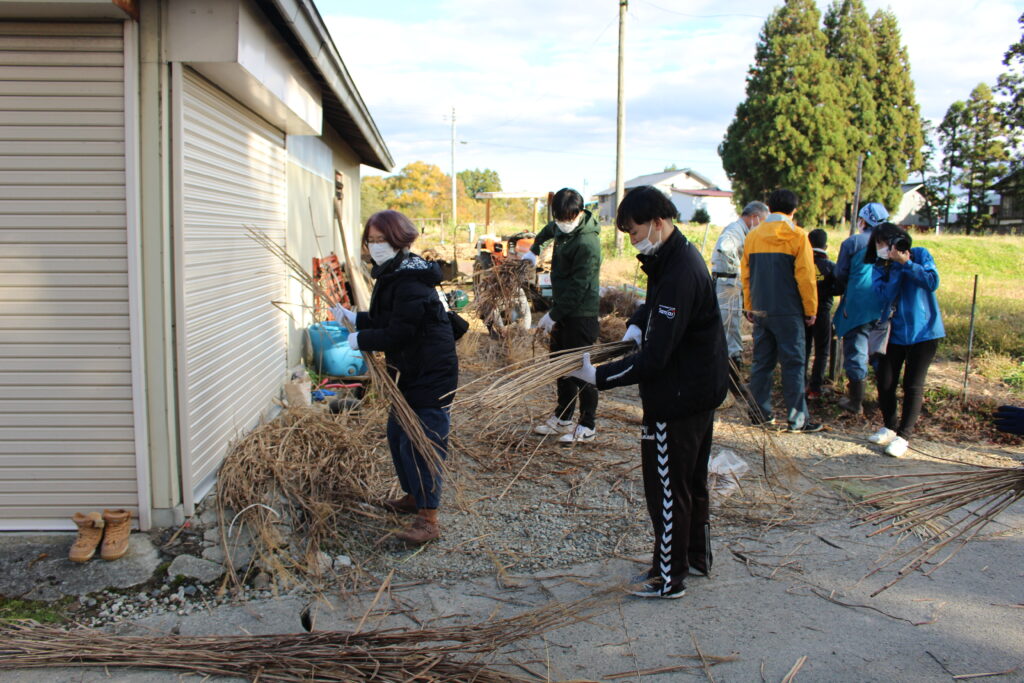
A simulated experience of creating the framework that serves as the foundation.
Make a bundle of thatch.
Tie the grass bundles to the framework.
The upper row is a demonstration by parent and child Takahashi.
Each person presented their impressions.
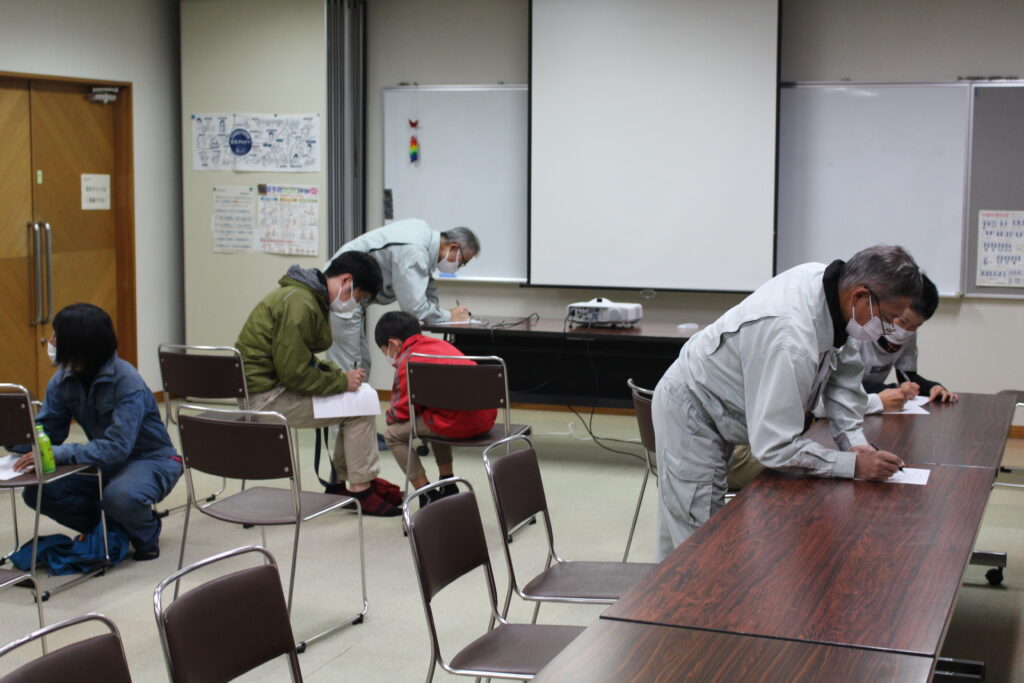
Finally, we asked them to fill out a questionnaire.

Nagaoka and Kashiwazaki

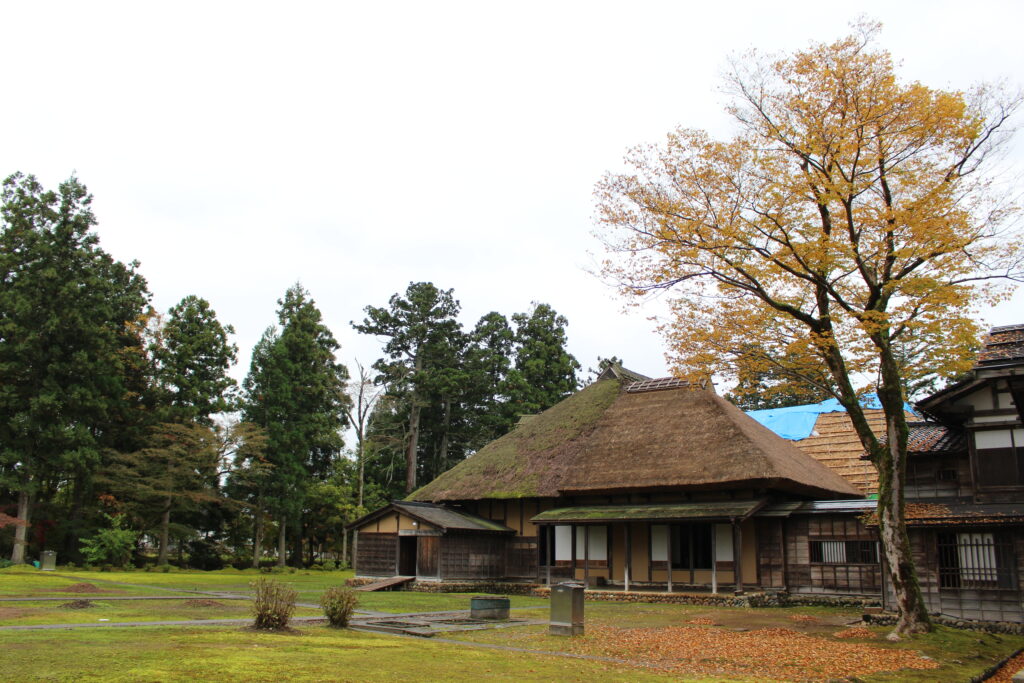
After field research in Joetsu City, we headed to Hasegawa Residence, an important cultural property in Nagaoka City.

The main building is said to have been rebuilt in 1706 after a major fire in 1716.

This is the oldest traditional Japanese house in Niigata Prefecture.

It was also used as a filming location for the movie "Toge: The Last Samurai."


After the Hasegawa residence, we headed to the Oginoshima circular village in Kashiwazaki City.

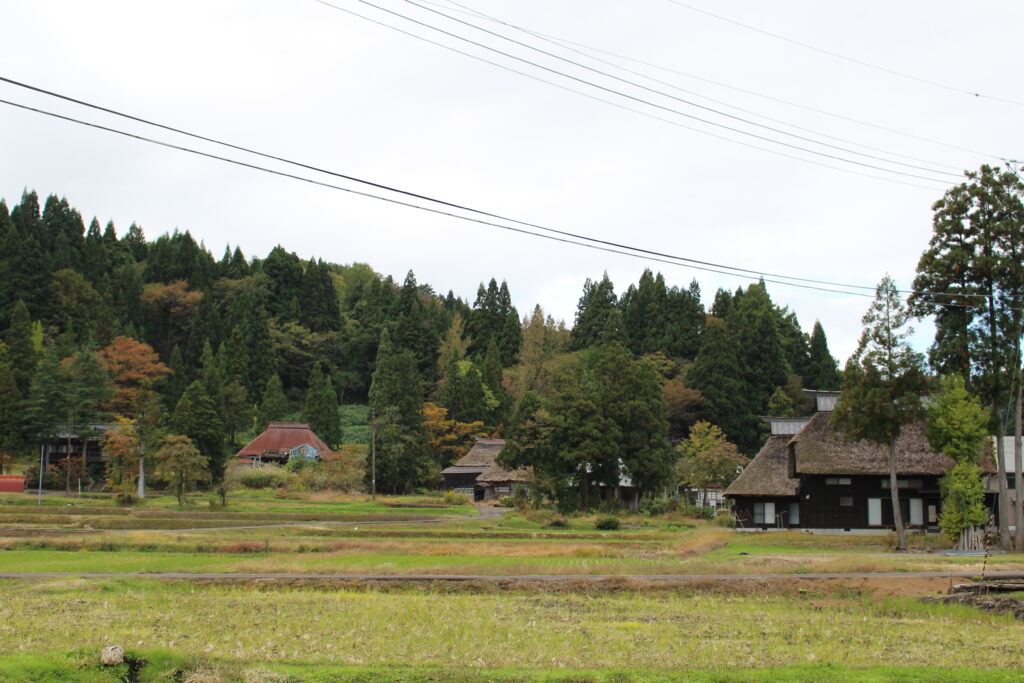
It is a village where traditional Nakamon-zukuri houses are arranged in a ring around rice fields.

To Joetsu

I went to Joetsu City, Niigata Prefecture.

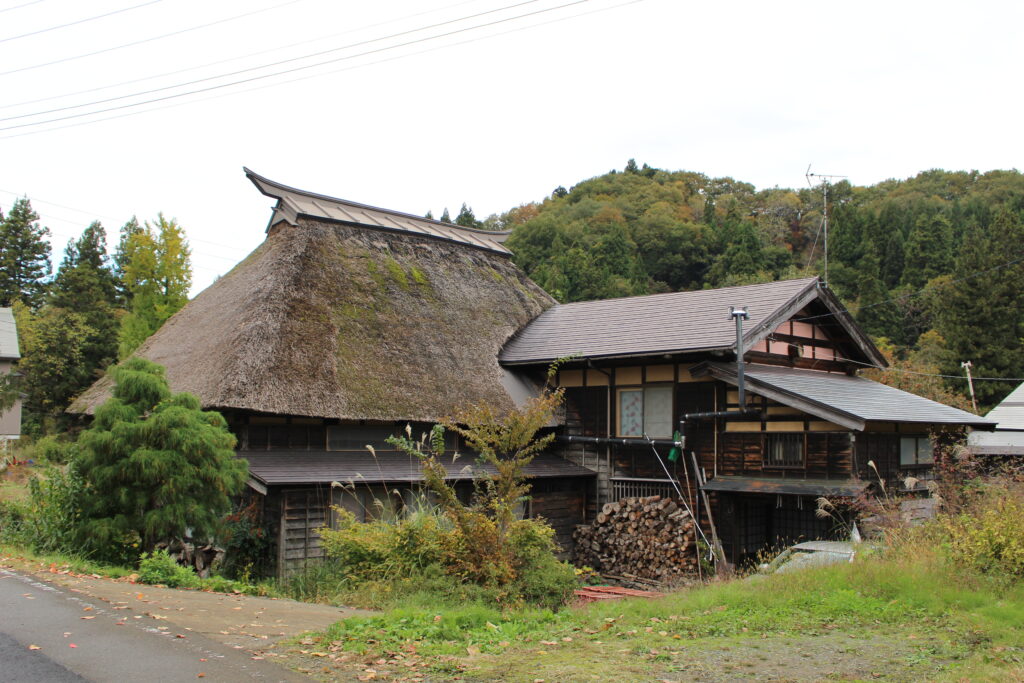
In this year's Environmental Design Exercise XNUMX, we are working on renovating an old folk house, and we will be conducting an on-site survey.

When it comes to renovating old folk houses these days, it's not just about renovating them, but there are a variety of examples, such as turning them into farmhouses, housing for immigrants, co-working spaces, workcation spaces, etc.

These require considerable repair costs, and in some cases, profitability may be questioned.

In that case, many old folk houses would not be eligible for such measures, and people would not know what to do with them, or they would end up being demolished even though they actually have value.

My challenge is to think of ideas for using old folk houses in a different way.


First, check the appearance.
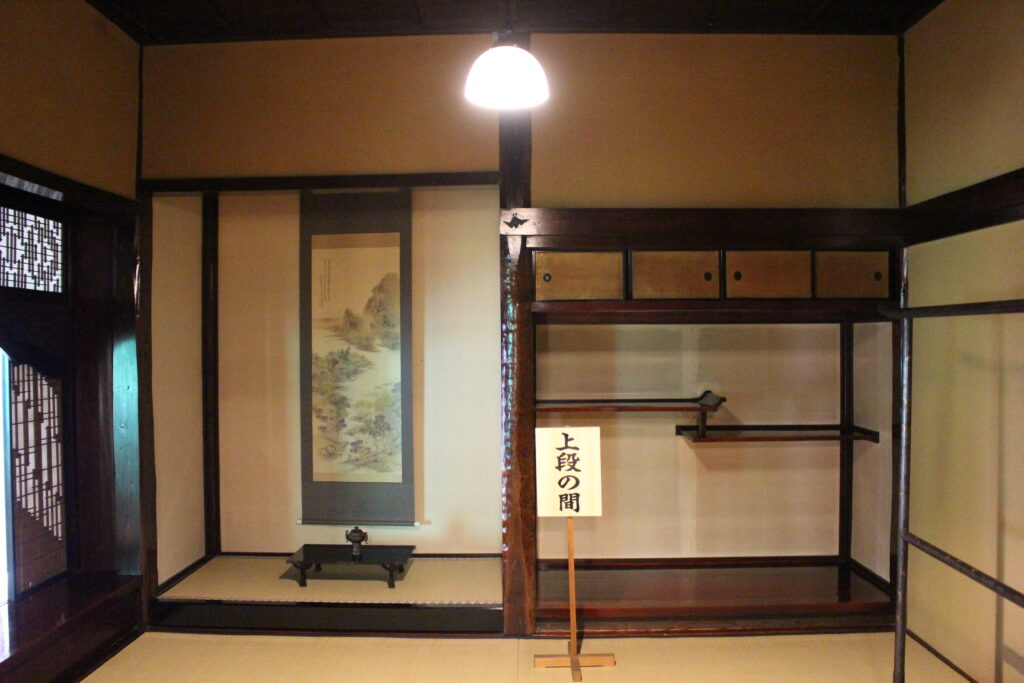
The lintel is splendid.There are a variety of fittings with different sizes and designs.
Students checking the position of pillars and floor plan.
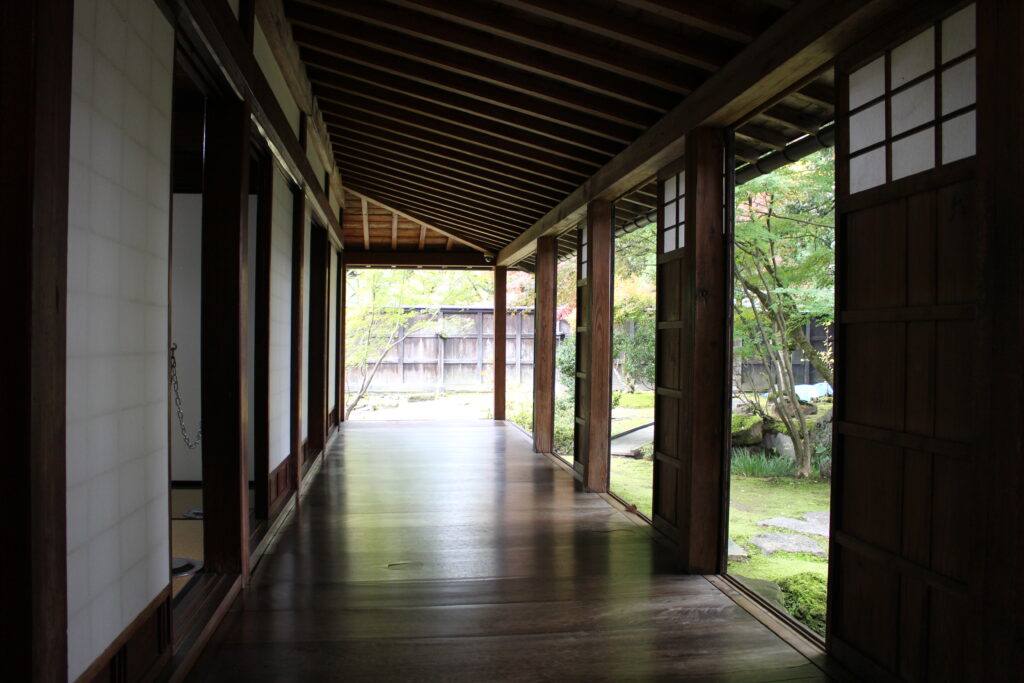
The ceiling on the porch is stylish.
How about making it so that you can see the roof structure?
Could bamboo be used?

It's early...

It's already September.

Only 2 months left?There are still two months left! ?


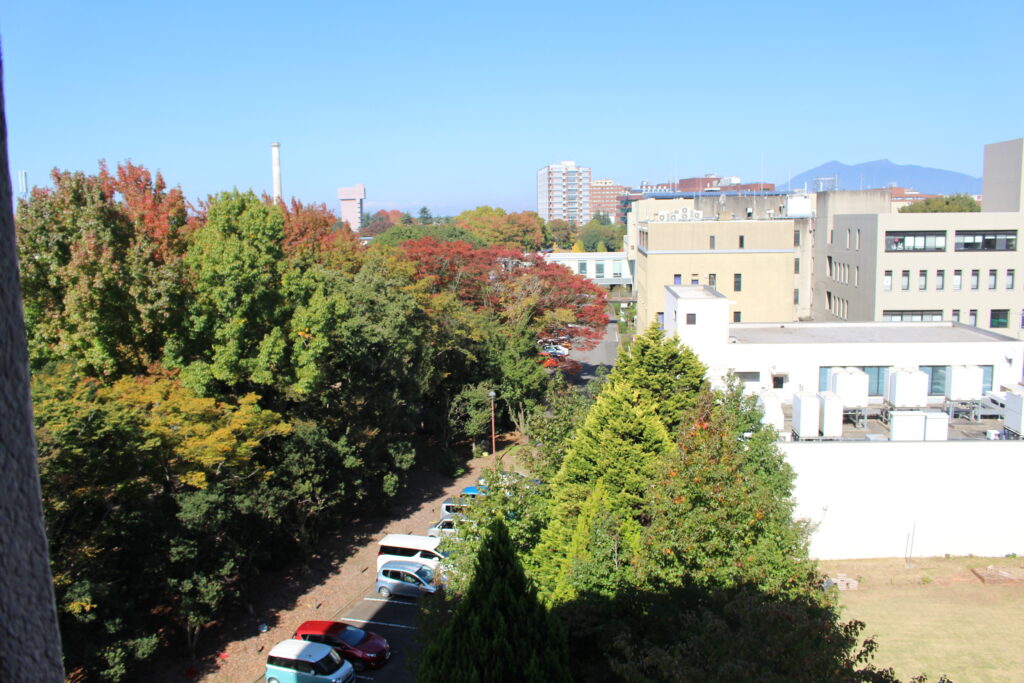
The campus of the University of Tsukuba is also fully autumn-like.


The scenery from the laboratory is completely autumnal.
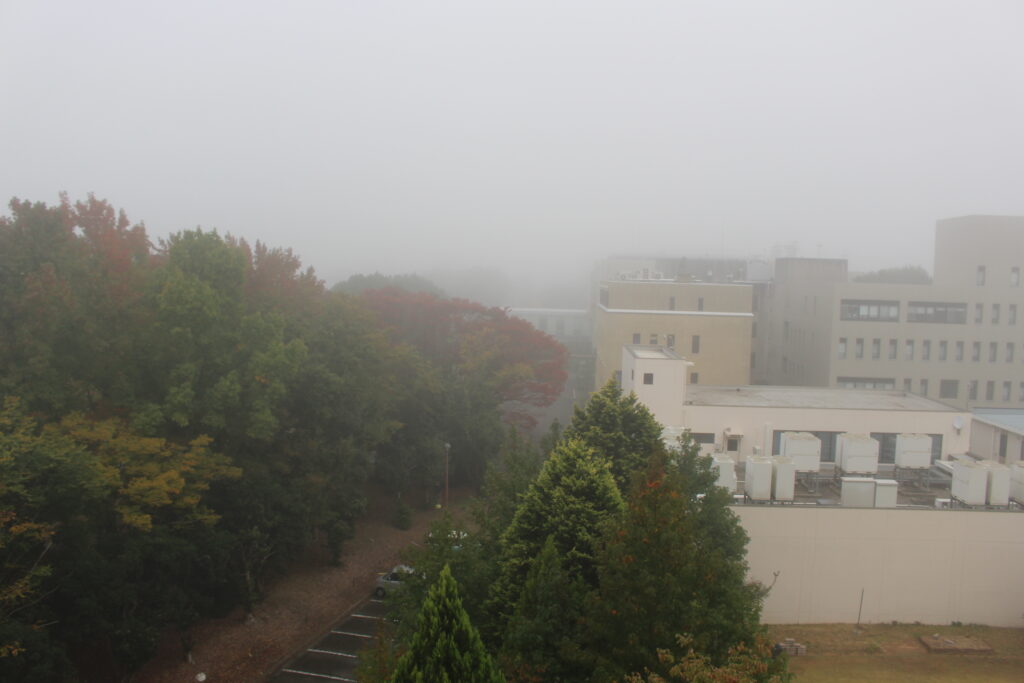
It was foggy the other day.